
Creative activities · Screen-free fun
5 Fun Things Every Kid Can Make With Household Items
Five easy DIY crafts for kids aged 5–11, made with everyday cardboard, socks, cups and other things already at home.
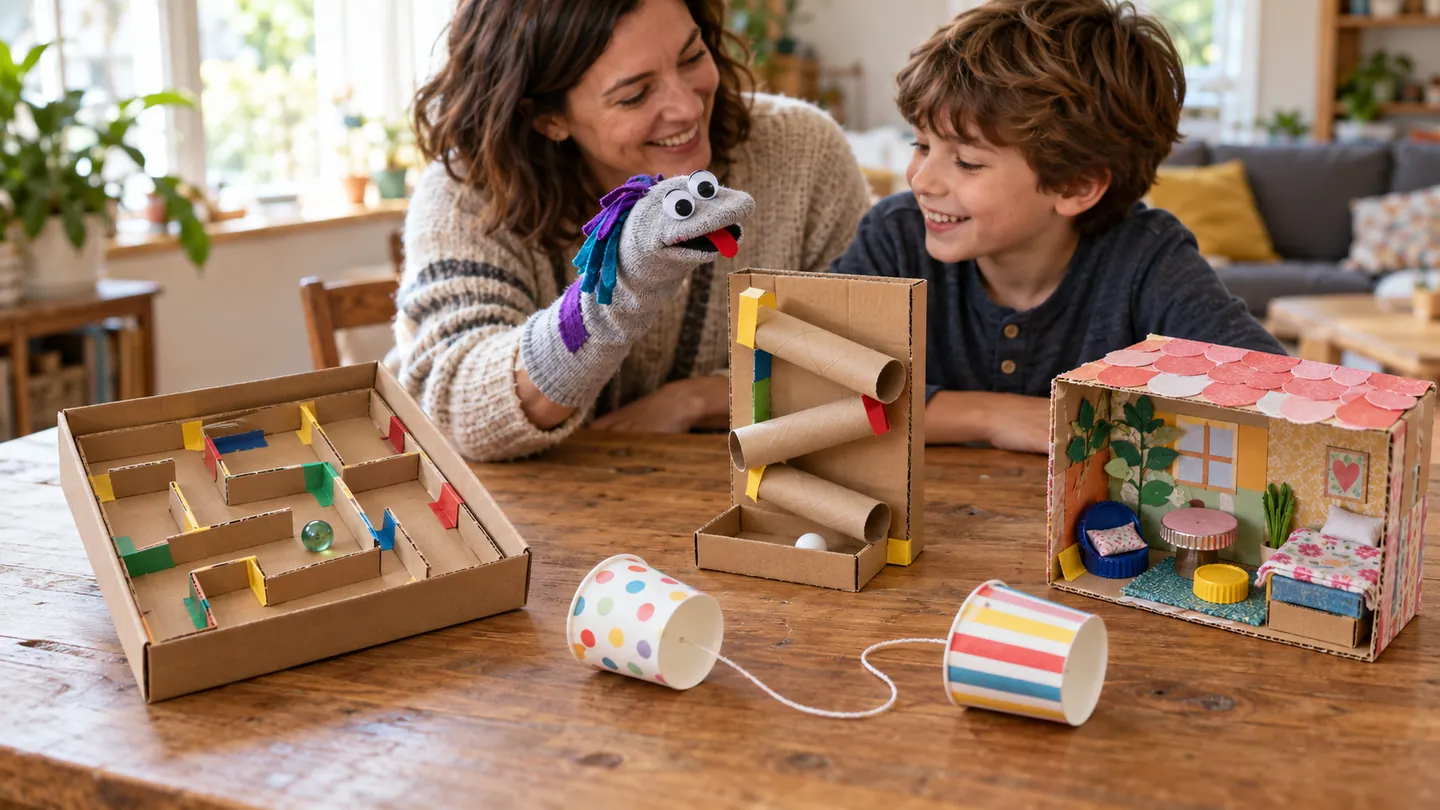
It’s one of those afternoons: the kids are bored, the weather isn’t cooperating, and nobody wants to spend money on a bag of craft supplies that will be used once. Before you head to the shops, take a look around the house. A shoebox lid can become a maze, an old sock can find a new character, and a couple of paper cups can turn into a telephone. These five projects are easy, inexpensive DIY crafts for kids using everyday household items: simple recycled crafts and creative indoor activities for children aged 5–11. They make screen-free activities for children, with clear steps and room for kids to make each idea their own. Gather what you already have, pick one project, and expect the result to be a little wonky. That’s part of the fun.
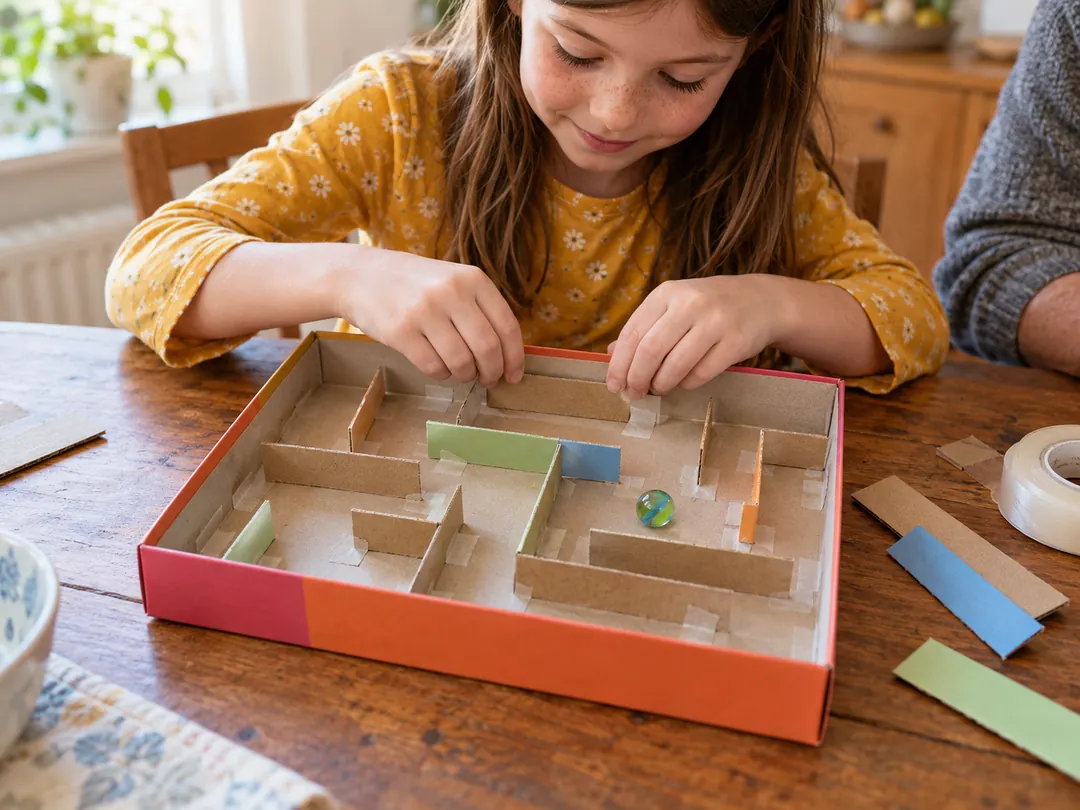
1. Build a Cardboard Marble Maze
You’ll need: Shoebox lid, cardboard strips, tape and a marble.
Turn the lid into a little maze. Children decide where the marble should travel, then test whether their cardboard walls guide it from start to finish.
How to make it
- Put the shoebox lid flat on a table or floor. Mark a start and finish with small pieces of paper.
- Arrange cardboard strips inside the lid to make lanes and turns. Leave gaps for the marble to pass through.
- Tape the strips down. An adult can trim strips to fit if needed.
- Place the marble at the start and tilt the lid gently to guide it to the finish.
- If it gets stuck, move a wall or widen a turn and test again.
What children practise: planning a route, solving problems and coordinating small movements.
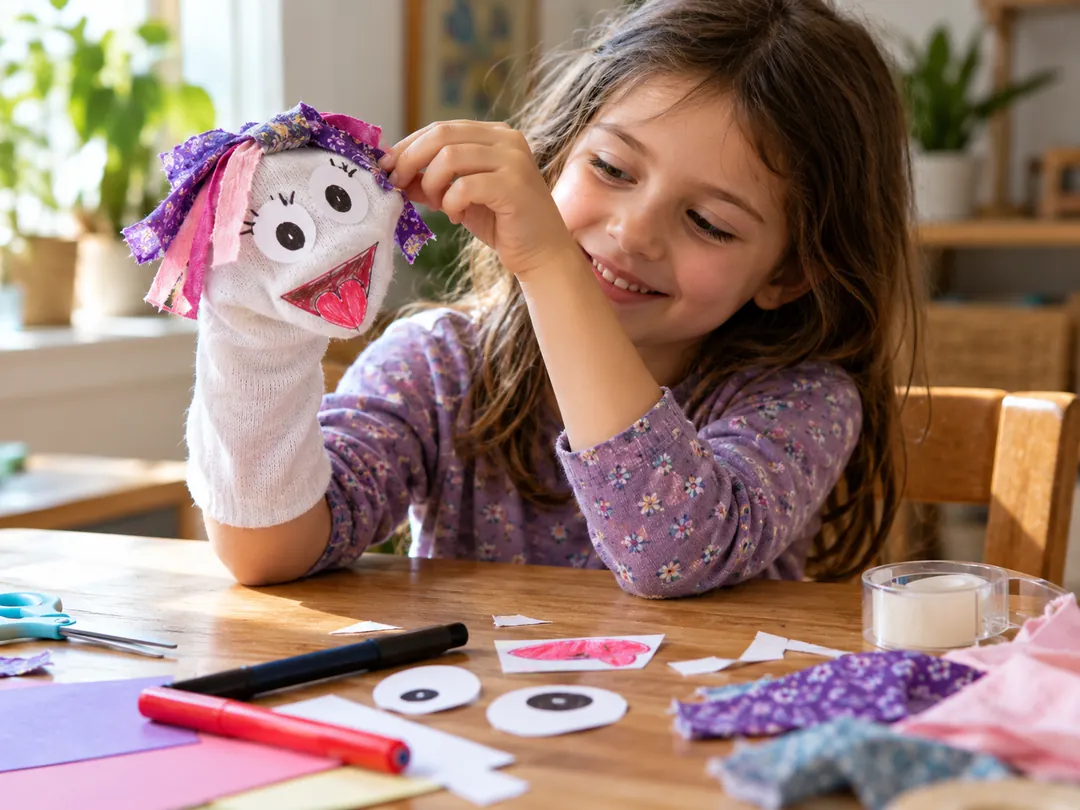
2. Create a Silly Sock Puppet
You’ll need: An old clean sock, paper, markers, tape and fabric scraps.
A sock puppet is more fun when it has a point of view. Is it shy? Does it tell terrible jokes? Children can make the face first, then discover the character as they play.
How to make it
- Put the sock on one hand and move your fingers to find where the puppet’s mouth should open.
- Draw eyes, eyebrows, teeth or a funny nose on paper and cut out the pieces with safe scissors.
- Use small pieces of tape to attach the paper features to the sock. Add fabric scraps for hair, a scarf or a silly hat.
- Give the puppet a name and decide what it likes, what it is afraid of, or what it wants to do today.
What children practise: storytelling, expression, fine-motor control and taking turns.
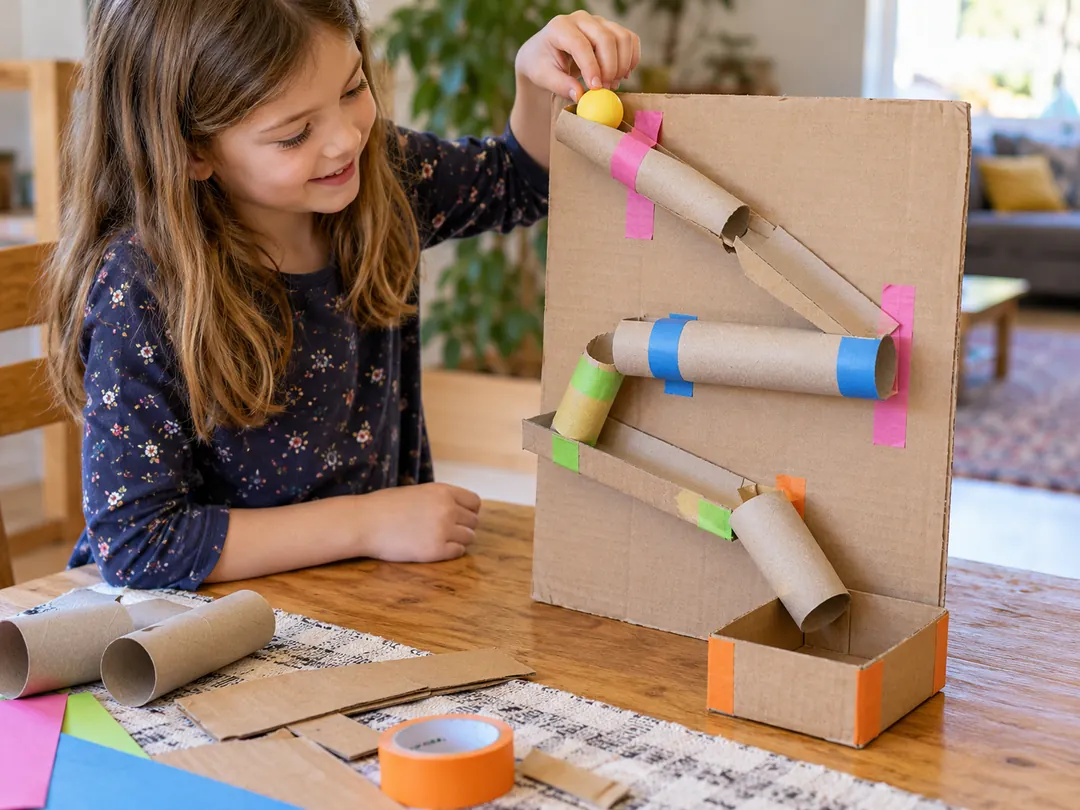
3. Make a Cardboard Tube Ball Run
You’ll need: Empty toilet rolls, tape, cardboard and a small ball.
Build a route that carries a ball from the top to a catcher at the bottom. The first version may stop halfway. That gives children a useful clue about where the next adjustment belongs.
How to make it
- Use a large piece of cardboard as a backing, or make the run on the floor against a stable surface.
- Place a cardboard tube at the top as the starting point and tape it in place.
- Add more tubes below it, overlapping the openings slightly so the ball can roll from one to the next.
- Make the last tube lead into a small cardboard catch tray. Check that the structure is stable before testing.
- Release the ball. If it stops or falls out, adjust the tube angle or overlap and try again.
What children explore: gravity and angles through hands-on trial and improvement. They can notice that a steeper tube usually makes the ball move faster.
4. Make a Secret String Telephone
You’ll need: Two paper cups, a length of string and a pencil.
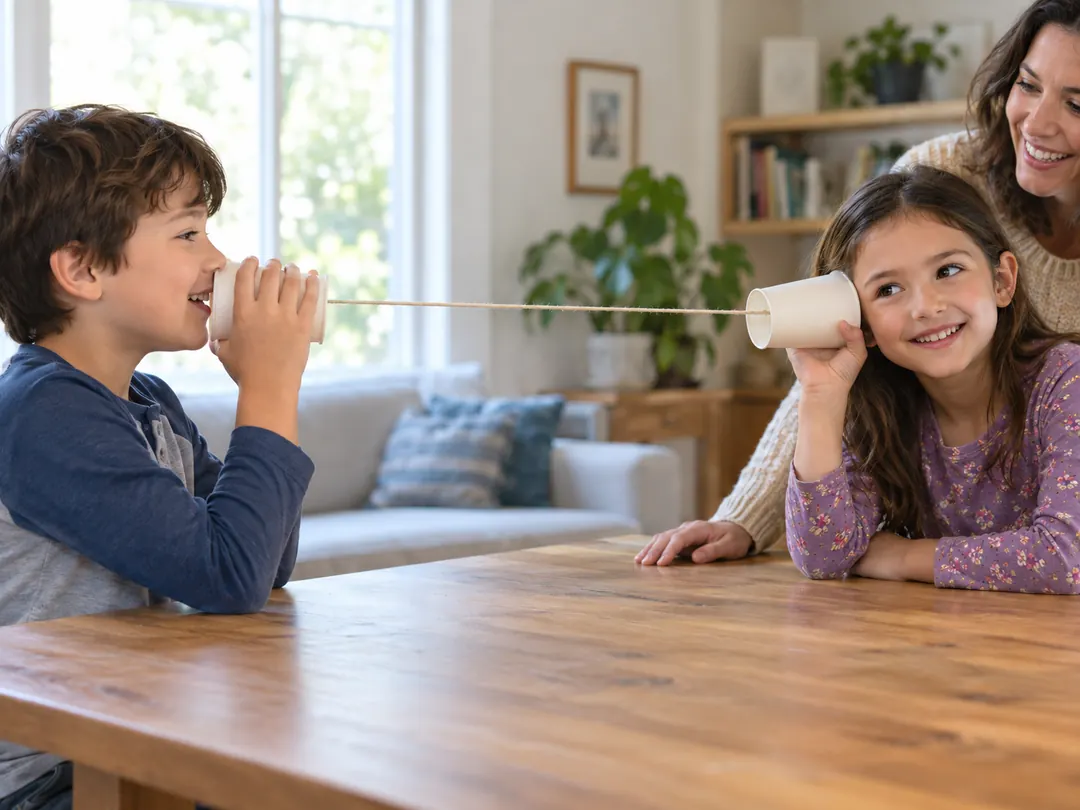
A pair of cups and a tight string can carry a quiet message across the room. The string needs to stay taut while one person speaks and the other listens.
How to make it
- Ask an adult to make a small hole in the centre of the bottom of each cup with the pencil.
- Thread one end of the string through each hole. Tie a large knot on the inside of each cup so the string stays attached.
- Stand far enough apart to make the string straight and taut. Keep the string away from faces, necks and walkways.
- One person speaks softly into a cup while the other listens with the second cup held to their ear. Take turns.
When you speak, your voice makes the cup vibrate. Those vibrations travel along the tight string and make the other cup vibrate too, carrying the sound to the listener.
5. Build a Miniature Dream House
You’ll need: A small cardboard box, bottle caps, paper, fabric scraps and child-safe glue.
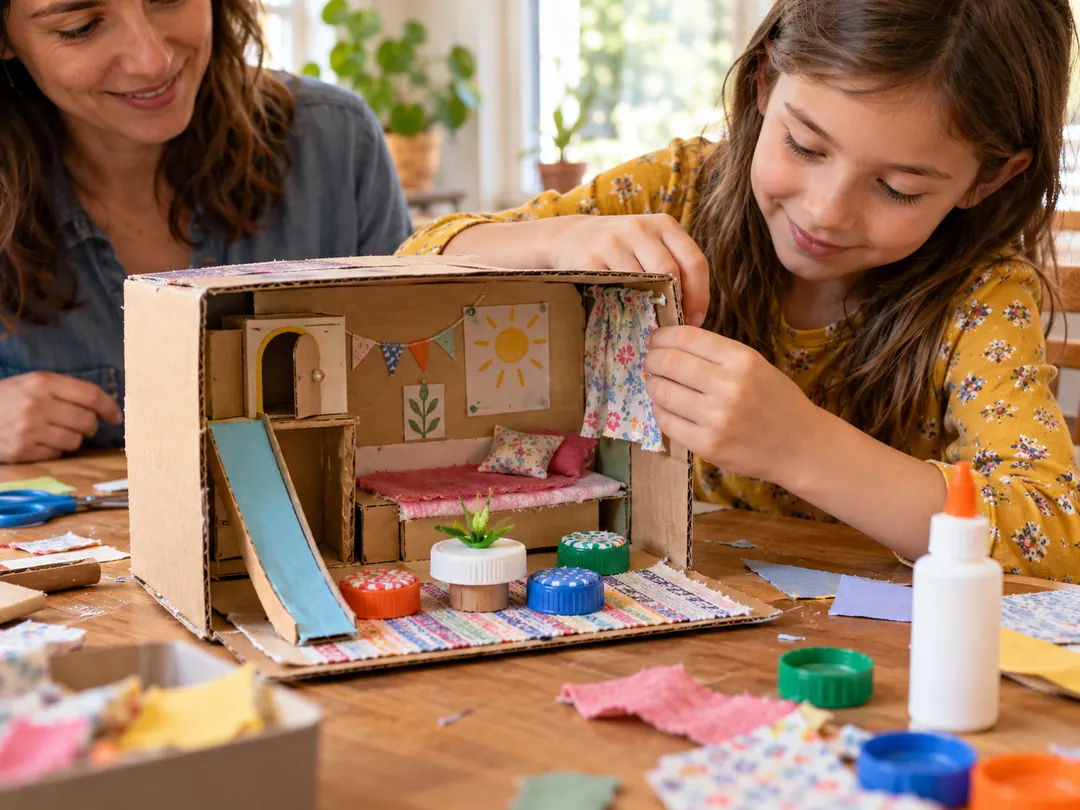
Make a tiny home for an imaginary person, creature or toy. It can be a cosy cottage, a moon base or a house with a room that nobody has invented yet.
How to make it
- Turn the box on its side so the open face becomes the front of the house. Check for staples or rough edges first.
- Use paper to make a rug, pictures, a bed or curtains. Fold scraps of fabric into blankets or cushions.
- Arrange bottle caps as stools, tables or plant pots. Glue pieces down only if you want them to stay in place.
- Add a magical feature: a secret door, a roof garden, a slide into the kitchen or a room that changes size.
- Let the glue dry, then tell a story about who lives there and what happens at home.
What children practise: designing, spatial thinking, storytelling and imagining someone else’s point of view.
Make something from what you have
You don’t need to finish all five projects in one afternoon. Pick the one that fits your time and materials, and let the child’s version be different from the picture. If you want more simple ideas, explore our screen-free activities for kids or try a free sample mission.
Find free printable activities →